Transmission

The Analyze Phase: Eradicating Root Causes with Operations Actionable Twins

Runink Logistics Operations Team
8 min read
The Analyze Phase: Eradicating Root Causes with Operations Actionable Twins

What are the Key Takeaways from this Executive Summary?

Quick Answer: The Analyze phase of Six Sigma transitions logistics teams from merely measuring defects to aggressively eradicating their root causes. By leveraging Operations Actionable Twins alongside Intent-Graph Optimization (IGO) and robust data posture governance, Continuous Improvement Managers can uncover hidden constraints, prevent schema drift from corrupting analysis, and eliminate persistent issues like demurrage and drayage delays.
  • Eradicate, Don’t Just Mitigate: The Analyze phase demands a shift from treating symptoms to systematically removing the fundamental drivers of logistics defects.
  • Overcome Analytical Blind Spots: Traditional root cause analysis often fails due to fragmented systems; Intent-Graph Optimization connects disparate data points across TMS, WMS, and YMS to map the true operational reality.
  • Protect the Integrity of Insights: Runink’s Data Posture Module detects schema drift in real-time, ensuring that the actionable insights generated by Operations Actionable Twins are based on pristine, reliable information.

How Does the Six Sigma Analyze Phase Expose Logistics Root Causes?

Quick Answer: The Analyze phase exposes logistics root causes by dissecting process data to identify the exact variables that drive operational defects, allowing supply chain leaders to isolate constraints rather than just observing failure rates.

For a Director of Logistics or a Continuous Improvement Manager, the journey toward operational excellence is paved with rigorous data evaluation. While the Measure phase establishes the baseline of performance—capturing metrics like On-Time In-Full (OTIF) rates and baseline dwell times—the Analyze phase is where the heavy lifting of problem-solving occurs. This phase is dedicated to answering one critical question: Why are we failing to meet our targets?

In complex logistics environments, the answer is rarely simple. A drop in OTIF might be the symptom, but the disease could be a misaligned cross-docking schedule, carrier capacity constraints in the FTL network, or chronic delays at specific port terminals leading to escalating demurrage charges. The Analyze phase forces operations teams to move past the superficial metrics and dig into the underlying friction points.

This requires robust analytical methodologies, moving beyond basic Pareto charts and fishbone diagrams to embrace dynamic, data-driven forensics. By examining the statistical relationships between different process inputs (such as carrier selection, transit lane, or warehouse staffing levels) and the ultimate output (delivery success or failure), supply chain leaders can pinpoint the exact origin of variance. However, uncovering these root causes requires unhindered access to high-fidelity data that spans the entire end-to-end supply chain.


Why Do Traditional Root Cause Analyses Fail in Complex Supply Chains?

Quick Answer: Traditional root cause analyses fail because they rely on static, siloed data snapshots that cannot capture the dynamic, interconnected nature of modern logistics networks, leading to misdiagnosed problems and ineffective interventions.

Despite the best intentions of Continuous Improvement teams, conventional root cause analysis techniques frequently fall short when applied to the realities of modern freight operations. The primary culprit is data fragmentation. A typical supply chain relies on a patchwork of legacy systems: a Transportation Management System (TMS) for routing, a Warehouse Management System (WMS) for inventory, and a Yard Management System (YMS) for facility flow. When these systems do not communicate fluently, the resulting analysis is inherently flawed.

Imagine attempting to trace the root cause of excessive dwell time at a regional distribution center. If the analyst only views the YMS data, they might conclude that yard jockeys are underperforming. However, if that data is isolated from the TMS, they miss the crucial context that inbound LTL carriers consistently arrive off-schedule due to upstream consolidation delays. By acting on incomplete information, the operations team might implement a corrective action that completely misses the mark—perhaps hiring more yard staff instead of renegotiating the inbound delivery windows.

Furthermore, traditional analytics are almost exclusively backward-looking. They analyze historical snapshots that represent a supply chain state that no longer exists. By the time a comprehensive report is generated, the network conditions, carrier capacities, and demand signals have likely shifted. To truly eradicate defects, Directors of Logistics need a methodology that reflects the live, breathing ecosystem of their operations, capable of mapping the intricate dependencies that define supply chain performance.


How Can Intent-Graph Optimization (IGO) Reveal Hidden Process Constraints?

Quick Answer: Intent-Graph Optimization (IGO) reveals hidden constraints by mapping the complex web of dependencies across the supply chain, allowing operations leaders to see how a disruption in one node propagates delays and defects throughout the entire network.

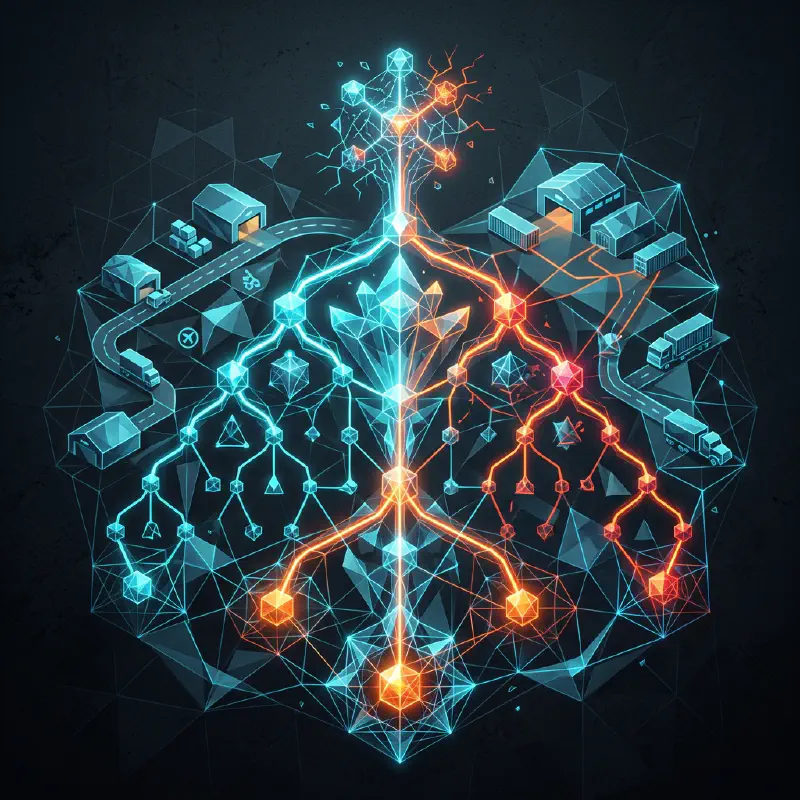
To overcome the limitations of siloed analysis, forward-thinking logistics organizations are turning to Intent-Graph Optimization (IGO). This advanced analytical approach fundamentally changes how Continuous Improvement Managers view their networks. Rather than treating supply chain events as isolated transactions in a flat database table, IGO models the supply chain as a dynamic, interconnected graph.

Every entity—whether it is a container sitting FOB at an origin port, a truck navigating a linehaul route, or a SKU awaiting put-away in a fulfillment center—is represented as a node. The relationships and interactions between these entities form the edges of the graph. By mapping the operational intent (the planned sequence of events) against the actual execution, IGO exposes the hidden constraints that traditional analytics miss.

For example, when analyzing spiraling demurrage and detention fees, an Intent-Graph can instantly trace the financial penalty back through the chain of custody. It might reveal that the root cause is not terminal congestion, but rather a persistent lack of chassis availability synchronized with the customs clearance process. By illuminating these deep-tier dependencies, IGO empowers logistics leaders to target their interventions with surgical precision. To explore how this technology can transform specific operational challenges, review our industry use cases.


What Role Does the Data Posture Module Play in Preventing Schema Drift?

Quick Answer: The Data Posture Module prevents schema drift by continuously auditing incoming data streams for structural changes, ensuring that analytical models and Operations Actionable Twins are not polluted by malformed or unexpected data formats.

The most sophisticated analytical tools are entirely dependent on the quality of the data they ingest. In the logistics industry, where data is sourced from thousands of external partners—carriers, forwarders, customs brokers, and telematics providers—maintaining data integrity is a relentless battle. One of the most insidious threats to accurate root cause analysis is schema drift.

Schema drift occurs when an upstream data provider silently changes the format, structure, or semantics of their data feed. A carrier might suddenly change their status code for “Arrived at Terminal,” or a telematics API might alter the way it formats timestamps. When these unannounced changes flow into an analytical engine, they corrupt the analysis, generating false positives, masking true root causes, and leading to misguided strategic decisions.

This is where Runink’s Data Posture Module becomes indispensable for the Analyze phase. The Data Posture Module acts as a vigilant gatekeeper, continuously monitoring the structural integrity of every data stream entering the control tower. If an electronic data interchange (EDI) feed experiences schema drift, the module detects the anomaly in real-time, quarantines the affected data, and alerts the operations team before the pollution can propagate into downstream models. By strictly enforcing data governance, the Data Posture Module guarantees that when a Director of Logistics identifies a root cause, they can trust the finding unequivocally.


How Do Operations Actionable Twins Drive Defect Eradication?

Quick Answer: Operations Actionable Twins drive defect eradication by creating a live, interactive digital replica of the supply chain, allowing Continuous Improvement Managers to simulate the impact of corrective actions and implement targeted changes directly within the twin.

The ultimate goal of the Analyze phase is not merely to find the root cause, but to develop the insight necessary to eradicate it. This transition from insight to intervention is powered by Operations Actionable Twins. Unlike standard digital twins, which are often passive dashboards used only for visualization, an Actionable Twin is intimately connected to the execution layer of the supply chain.

When a Continuous Improvement Manager identifies a systemic bottleneck—such as a specific LTL cross-docking process that consistently causes missed outbound cutoff times—they can use the Operations Actionable Twin to model the solution. They can adjust routing logic, alter appointment scheduling parameters, or shift carrier allocations within the twin’s simulated environment to see if the proposed fix actually resolves the defect without creating unintended consequences elsewhere in the network.

Once the optimal corrective action is validated, the “actionable” nature of the twin allows the operations leader to push those systemic changes back into the physical execution systems. This creates a seamless, closed-loop process for continuous improvement. By bridging the gap between deep analytical discovery and immediate operational execution, Operations Actionable Twins ensure that identified root causes are permanently eradicated from the logistics network.


Conclusion

Quick Answer: The Analyze phase requires a transition from observing symptoms to eradicating root causes; by utilizing Intent-Graph Optimization and Operations Actionable Twins, logistics leaders can systematically eliminate constraints and achieve operational excellence.

Mastering the Analyze phase of the Six Sigma methodology is the defining characteristic of a world-class logistics organization. When operations teams move beyond superficial metrics and begin dismantling the structural root causes of their supply chain defects, they unlock unprecedented levels of efficiency, resilience, and profitability. The key to this transformation lies in adopting the right analytical framework—one that can decipher the complexity of global freight networks while maintaining uncompromising data integrity.

By deploying Runink’s advanced suite of tools—including the schema-guarding Data Posture Module, the deep-mapping capabilities of Intent-Graph Optimization, and the execution power of Operations Actionable Twins—Directors of Logistics and Continuous Improvement Managers can confidently identify and permanently resolve the constraints holding their networks back. Ready to eradicate your most persistent logistics challenges and accelerate your continuous improvement journey? Contact our team to learn how Runink can transform your root cause analysis.


Runink: Data You Can Trust. Decisions You Can Defend.

Your Go-to Hub for for orchestrating secure, testable, and governance-driven data pipelines at scale. Fitting your Cloud, Data Engineering, and advanced analytical initiatives with secure solutions, and cutting-edge compliant technologies.