What are the Key Takeaways from this Executive Summary?
Quick answer
- Five levels: Reactive, Defined, Managed, Integrated, Autonomous. Each has a recognisable look on the floor, in the planning office and in the board pack.
- The three common mistakes are scoring yourself kindly, comparing yourself with the wrong firms, and treating the result as a shopping list. All three produce a plan nobody follows.
- Do the first pass internally. Six weeks of consulting time mostly goes into gathering facts you already hold. A score your own team disagrees about is more useful than one you were handed.
Why Do Most Supply Chain Transformations Stall Before They Start?
Quick answer
Every supply chain leader knows the pressure. The board wants resilience. Customers want speed. Finance wants the cost down. All at once.
The instinct is to buy something. The firms that modernise well do something duller first: they work out where they actually are.
That is what a maturity assessment is. It scores your capabilities, compares them with the right peers, and puts your spending in an order that makes sense.
What Are the Five Levels of Supply Chain Maturity?
Quick answer
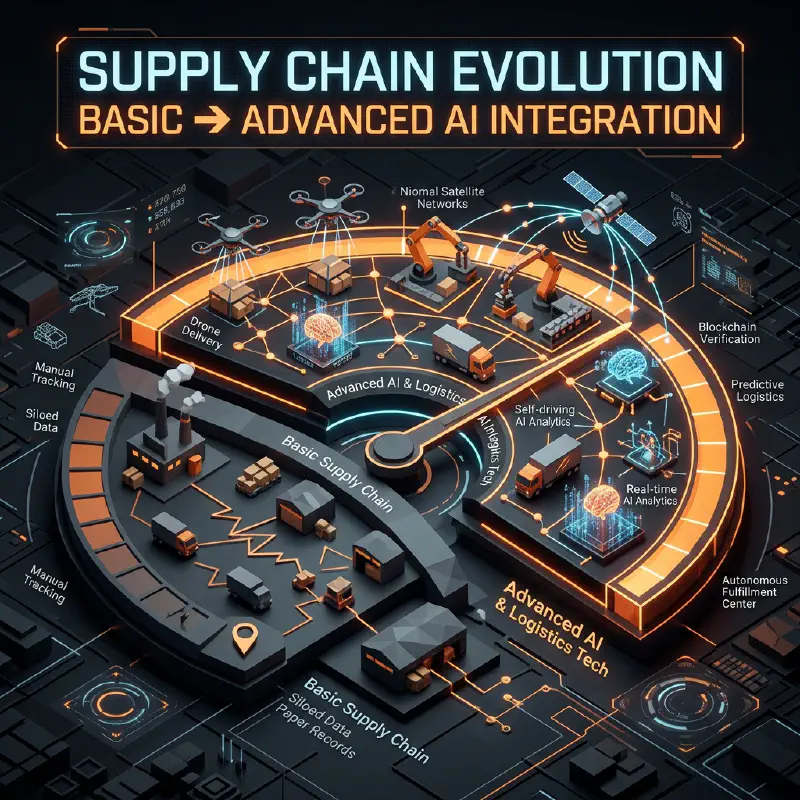
Frameworks from Gartner and the ASCM SCOR model both settle on five levels. Here is what each looks like in practice.
Level 1 — Reactive. Spreadsheets and long memories. Demand planning is a monthly guess. Freight goes on the spot market by default. Nobody measures how long trailers wait, and demurrage charges are treated as a cost of doing business. The team spends its day on exceptions.
Level 2 — Defined. Written procedures exist, and are followed some of the time. There is a warehouse or transport system, often half used. On-time delivery and fill rate are tracked, but working out why something went wrong is a manual job done afterwards.
Level 3 — Managed. Data flows in a settled shape. Sales and operations planning connects the forecast to buying and to transport. Mode choice follows rules rather than habit. Cost to serve is measured by lane. FOB and CIF terms — who pays the freight and where the risk passes — are negotiated rather than inherited.
Level 4 — Integrated. Suppliers, your own sites and customers are visible in something close to real time. Exceptions are raised before they spread. Port moves are scheduled against current congestion. Buying decisions include landed cost, supplier risk and emissions.
Level 5 — Autonomous. Software makes the routine calls: rerouting, reordering, allocating carriers. Planning runs continuously rather than monthly. People handle the exceptions and the relationships. This is the end state McKinsey’s Digital Supply Chain Compass describes.
Most firms sit between Levels 2 and 3, with one or two functions further ahead.
What Dimensions Should a Supply Chain Maturity Assessment Cover?
Quick answer
A useful assessment is a heat map, not a grade. Scoring each area separately shows you where the block is.
Planning and demand sensing — How far ahead can you see? Are you reacting to orders or shaping them? Is your planning meeting a decision or a review?
Buying and supplier management — Do you know who supplies your suppliers? Do you measure a supplier on delivery as well as on price? Would a regional disruption stop you?
Logistics execution — Do you compare modes before booking? Can you say how long goods wait at each point? Do your yard, transport and warehouse systems share a record?
Systems and data — Are your systems joined up or separate? Is the data clean enough to read, or does each report start with a week of reconciliation? Is there one agreed record for a shipment?
People — Do your planners read data comfortably? Is there a career path in supply chain, or is it still a back office? Can a cross-functional team act without three approvals?
Emissions and compliance — Can you produce an emissions figure per shipment? Are emissions targets in your buying scorecards, or in a separate report nobody uses?
What Are the Most Common Pitfalls in Supply Chain Maturity Assessments?
Quick answer
Kind scoring. Teams rate themselves well when there is nothing to rate against. A buying team that thinks it is Integrated may simply never have seen what Level 4 looks like elsewhere. The fix is outside data, not internal agreement.
Wrong comparison. Scoring a cold-chain pharmaceutical distributor against a bulk commodity shipper tells you nothing. The useful comparison is with firms that handle similar products, under similar rules, across a network of similar shape. If you cannot find one, say so, and score against the level descriptions instead of against a peer.
Ignoring the people. The step from Level 3 to Level 4 is rarely about software. It needs new roles, new incentives and somebody senior still paying attention a year later. A planner rewarded for forecast accuracy will not start shaping demand because a new tool arrived.
How Can You Move from Assessment to Actionable Roadmap?
Quick answer
An assessment is only worth doing if it turns into a funded plan. Three rules help.
First, order by constraint, not by ambition. If your execution is at Level 2 and your planning is at Level 3, better forecasting will not improve delivery. The block is downstream. Fix that.
Second, sequence for momentum. Pick two or three changes that can show something real early — usually in data quality, in what gets reported, or in carrier management. An early result is what funds the next piece of work.
Third, build the data foundation first. Everything above Level 3 depends on records that are clean, joined up and reachable. If a shipment lives in a dozen spreadsheets and three systems that disagree, no model will help. Get the data foundations and governance in place before adding anything on top.
Conclusion
Quick answer
The distance between knowing you need to modernise and actually modernising is a measurement gap. An assessment closes it by telling you, area by area, where you stand.
This used to mean six to eight weeks of consulting, dozens of interviews and a large fee. Much of that time goes into collecting facts your own systems already hold. So do the first pass yourself: score each area above, scored by the person who owns it.
An internal score your team argues about is more useful than an external one everybody accepts, because the argument is where the real finding is. Talk to us if you want a second read on yours.
The firms that do well over the next decade will be the ones honest enough to score themselves today, and disciplined enough to build the plan from what they find.
Sources
- ASCM (APICS) SCOR Model — The Supply Chain Operations Reference model, with standard process definitions and performance measures end to end
- McKinsey Digital Supply Chain Compass — Framework describing the capabilities behind automated supply chain decisions