


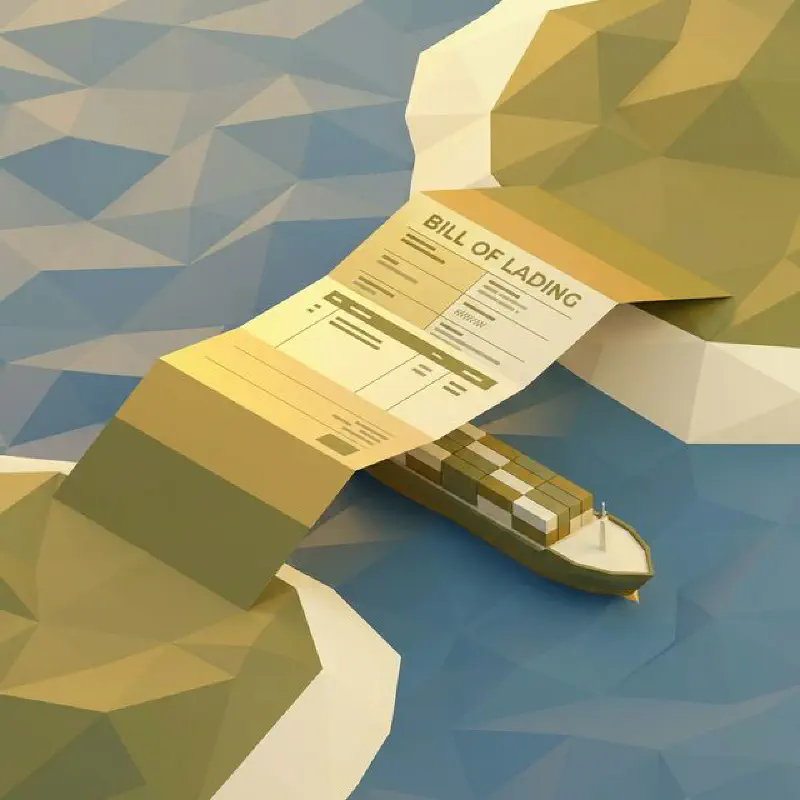
What are the Key Takeaways from this Executive Summary?
Quick answer
International trade runs on documents. At the centre sits one of them: the bill of lading (BoL).
It connects parties who will never meet, in different countries, under different legal systems. For a shipper or a trader, it is the document that decides who owns the cargo and who answers for it.
The three jobs, often called its tripartite personality:
- Receipt: it records how the goods looked when they were loaded.
- Evidence of contract: it evidences the contract to carry them.
- Document of title: it can be transferred, so ownership can move while the ship is at sea.
The “honest mirror”: what a clean bill commits you to
Quick answer
When a carrier takes the cargo, the bill records how it looked. That is the receipt function, and it is a judgement made at the quayside.
The standard is not forensic. It is what a reasonable person with reasonable eyesight would notice. No rusting coils, no leaking bags, no visible mould: the master issues a clean bill.
That signature carries weight. Under the doctrine of estoppel, a clean bill blocks the carrier from later claiming the damage pre-dated loading. And issuing a clean bill for cargo known to be damaged is fraud under English law. It voids the carrier’s protection and indemnity cover, which leaves the carrier facing claims with nothing behind it.
Related: our claims recovery use case covers reading shipping documents against the operational record.
The “hidden rulebook”: when the paper becomes the contract
Quick answer
The bill changes character depending on who holds it. For the original shipper it is evidence of a booking note already agreed. Once it passes to a third-party receiver, it becomes the contract of carriage.
That distinction decides who you sue. The Starsin case showed that identifying the carrier is rarely obvious. Look past the logo on the front and read the signature box. A bespoke signature overrides printed text. A demise clause can mean the charterer is liable rather than the shipowner.
There is one more trap. Many bills incorporate terms from a charter party the receiver has never seen, including arbitration clauses. If you are taking delivery under a bill, the terms you are bound by may not be printed on it.
Keys to the warehouse: the bill as trade currency
Quick answer
The strongest property of the bill is that it can be passed on. Under the Carriage of Goods by Sea Act 1992 (COGSA 1992), ownership can change hands while the ship is still sailing. A bill made out “to order” moves by endorsement on the reverse, which makes the paper function as a kind of currency.
A bill becomes spent once the carrier has delivered the goods. But trade moves faster than post. COGSA 1992 means a party is not left without recourse simply because the ship arrived before the documents: the right to sue can still be acquired under a spent bill where the sale contract was agreed while the cargo was afloat.
Related: our compliance use case covers checking trade documents against what the records show.
A worked example: the journey of the Ukrainian corn
Quick answer
This is a worked example, not a case we handled.
Corn is loaded at Chornomorsk. The master sees high moisture in the stow. The shipper needs a clean bill to get paid under its bank’s terms, and offers a letter of indemnity in exchange for the signature. The master signs.
While the vessel crosses the Mediterranean, the corn is sold several times, each trader endorsing the back of the bill. By the discharge port, the cargo has moulded in the heat.
The final receiver holds a clean bill for rotten cargo. Because the condition was misrepresented at loading, the carrier is liable for the damage. And because the letter of indemnity covered a knowingly false statement, the protection and indemnity club can decline the claim. The indemnity was only ever as good as the shipper behind it.
5. The ecosystem: a dropshipper’s view
Quick answer
The flow is worth writing down in your own terms.
The supplier ships, and a house bill of lading is issued to the freight forwarder. The forwarder consolidates. At destination, the cargo is released against that document.
Two practical points follow. The party holding the document controls when your goods move. And if the document describes the goods wrongly, the cost of fixing it lands on whoever needs them soonest, which is usually you.
Conclusion: the foundation of reliability
Quick answer
The bill of lading has lasted because it standardises trust between strangers. The friction in it is the part technology can address.
Runink FACE works on the consequence rather than the document. When a consignment is held because a paper is missing or wrong, the charge starts running that day, and the entry sits in a queue nobody reads end to end. FACE takes the entry records — the hold reason, which documents are outstanding, how many days it has been held, the agreed per-day rate — and produces one item naming the entry, what is missing, and what the hold has cost so far, for a person to approve an action on. The arithmetic is fixed and stated; no model is involved in it. The legal positions stay with your counsel, and the three functions above are still where liability sits.
Want to look at your own documents? Book a consultation.